
 Portuguese
 korean
 Russian
 Japanese
 Arab
Arab Vietnam
 Italian
 Español
 Turkish
 French
 Deutsch
My teeth hurt when I eat irritating food, brush my teeth, or chew hard things?
The saying "toothache is not a disease, it kills people" has misled most people, so many people still think that toothache is not in the category of disease and has not been taken seriously. Today we will talk about the sour "dentin hypersensitivity".
What is dentin hypersensitivity?
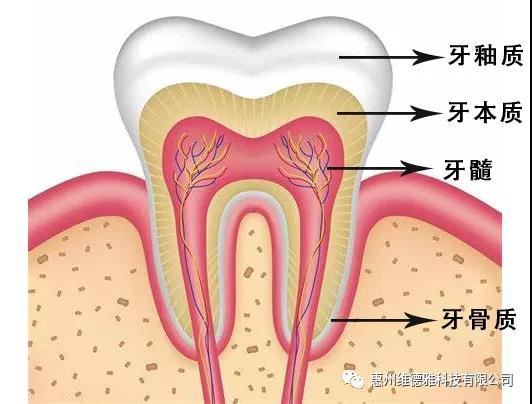
Dentine hypersensitivity refers to the abnormal soreness of teeth when the dentin is partially exposed or the body’s resistance is reduced. , Sweet, salty, spicy), machinery (brushing teeth, rubbing hard objects), etc. Its most typical onset features are rapid onset, sharp pain, and short duration.
Why does dentine hypersensitivity occur?
T0eeth are composed of four parts: enamel, dentin, cementum and pulp. Enamel surrounds the dentin at the crown of the tooth, cementum surrounds the dentin at the root of the tooth, and dentin surrounds the pulp cavity.
Damage to tooth enamel or gum problems can expose dentin and eventually cause tooth sensitivity. For example: caries, wedge-shaped defects, periodontal atrophy and so on.
Caries: Commonly known as cavities and tooth decay, it is mainly caused by the erosion of the tooth surface by bacterial decomposition products in the oral cavity. Long-term cleaning is not in place, bacteria decompose the sugar in food to produce acid, and then gradually corrode the teeth to form black holes, resulting in exposure of dentin.
Wedge-shaped defect: The structure of the enamel and cementum boundary of the tooth neck is relatively weak and easy to be worn away. It is easy to form a gap when using a hard-bristled toothbrush or brushing the teeth for too long, resulting in exposure of the dentin of the tooth neck.
Periodontal atrophy: refers to the retreat of periodontal tissue. The clinical manifestations are the reduction of alveolar bone height and the receding of the gums, which leads to the exposure of the dentin of the tooth neck.
How to prevent it?
1. If symptoms such as caries, wedge-shaped defects, periodontal atrophy, etc. occur, go to the stomatology department of the hospital for treatment in time;
2. Pay attention to oral hygiene, brush your teeth in the morning and evening, rinse your mouth after meals, develop a good vertical brushing habit, and rinse your mouth with warm water;
3. Avoid eating cold and hot foods;
4. Don't eat too hard food to reduce excessive wear of teeth. Chew food on both sides, not sideways.


